
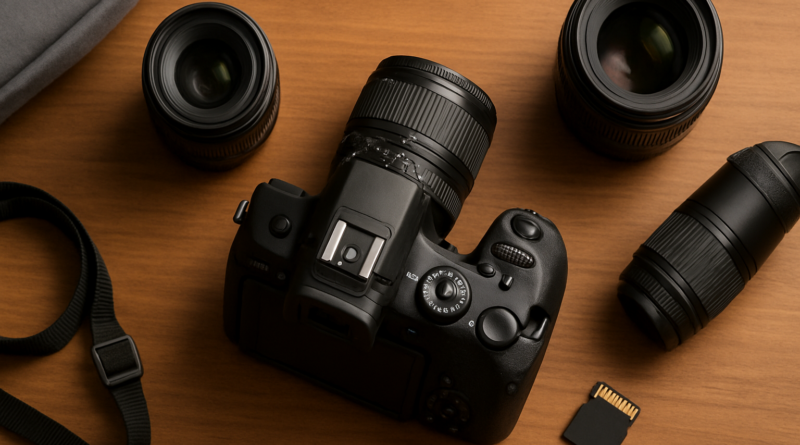
Best Budget Cameras for Beginners in 2026
Quick Picks: Best Beginner Cameras in 2026
| Camera | Best For | Why It’s a Good Beginner Pick |
|---|---|---|
| Canon EOS R50 | Best overall beginner camera | Easy controls, strong autofocus, good photo/video balance |
| Nikon Z50II | Best beginner Nikon | Modern autofocus, EVF, strong stills, good beginner tools |
| Sony ZV-E10 II | Best for YouTube and video | 26MP APS-C sensor, creator-focused design, strong video tools |
| Fujifilm X-M5 | Best for style and JPEG colors | Compact body, Fujifilm film simulations, excellent video specs |
| Canon EOS R100 | Cheapest mirrorless starter pick | Very affordable RF-mount entry point, best for basic stills |
| Nikon Z30 | Best budget vlogging alternative | Small, simple, travel-friendly, strong video-first beginner body |
| Nikon Z5 | Best budget full-frame upgrade | Full-frame image quality at entry-level full-frame pricing when discounted |
Best overall choice: Canon EOS R50
Best for video creators: Sony ZV-E10 II
Best cheapest option: Canon EOS R100
Best long-term Nikon pick: Nikon Z50II
How to Choose a Beginner Camera Without Wasting Money
Buying your first camera is not about chasing the biggest megapixel number. That is one of the easiest traps beginners fall into. A good starter camera should make photography easier, not more confusing.
For most beginners in 2026, the best value is an entry-level mirrorless camera with a kit lens. Mirrorless cameras give you live exposure preview, modern autofocus, compact bodies, interchangeable lenses, and better upgrade paths than most old compact cameras or budget DSLRs.
Before you buy, focus on these five things:
- Autofocus: Face and eye detection matter more than extra megapixels.
- Lens system: Make sure affordable lenses exist for the camera mount.
- Ease of use: A beginner camera should not punish you with bad menus.
- Video needs: If you want YouTube or TikTok content, prioritize screen, mic input, and autofocus.
- Total kit cost: Camera body, lens, memory card, spare battery, and bag all count.
Do not spend your entire budget on the body. A cheaper camera with a better lens is often smarter than a more expensive body with a weak lens.
1. Canon EOS R50 — Best Overall Budget Camera for Beginners
The Canon EOS R50 is the safest all-around recommendation for most beginners. It is small, beginner-friendly, and strong enough for travel, portraits, family photography, social media, and casual video.
Canon gives the R50 a 24.2MP APS-C sensor, Dual Pixel CMOS AF II, and oversampled 4K video from 6K capture, which makes it more capable than a basic point-and-shoot while still being easy to learn.
The biggest reason to choose the R50 is simplicity. Canon’s colors are pleasing, the autofocus is dependable, and the camera is approachable for people moving up from a phone.
Best for:
Beginners who want one camera for photos, travel, family, portraits, and basic video.
Why beginners will like it:
- Easy Canon controls
- Reliable autofocus
- Good image quality from the APS-C sensor
- Lightweight body
- Strong automatic modes
- Good starter lens kit options
Watch out for:
Canon RF-S lenses are still a smaller ecosystem than Sony E-mount or Fujifilm X-mount. You can adapt older Canon EF/EF-S lenses, but that adds cost and bulk.
2. Nikon Z50II — Best Beginner Nikon Camera
The Nikon Z50II is one of the strongest beginner cameras if you want a traditional camera feel with modern autofocus. It has a 20.9MP APS-C sensor, EXPEED 7 processor, subject detection for nine subject types, up to 30 fps shooting, 4K UHD/60p video with a crop, Full HD/120p, N-Log, and a vari-angle monitor.
This is the beginner camera I would recommend to someone who wants to learn photography seriously, not just take better vacation photos. The electronic viewfinder, Nikon handling, and Z-mount system make it feel more like a “real camera” than many creator-first bodies.
Best for:
Beginners who want to grow into photography, portraits, travel, wildlife, and hybrid shooting.
Why beginners will like it:
- Comfortable grip
- Electronic viewfinder
- Strong autofocus improvements
- Good still-photo experience
- Useful beginner-friendly color controls
- Better long-term growth than many ultra-cheap bodies
Watch out for:
The Nikon DX Z lens lineup is improving, but still not as broad as Sony E-mount. If lens choice is your top priority, compare carefully before committing.
3. Sony ZV-E10 II — Best Budget Camera for YouTube and Video Beginners
The Sony ZV-E10 II is the best pick here for beginners who care more about video, YouTube, vlogging, talking-head content, product shots, and social media than traditional still photography.
Sony lists the ZV-E10 II with a 26MP APS-C sensor, interchangeable E-mount lens support, a flip-out vari-angle touchscreen, vertical video-friendly interface, and creator-focused audio and video features. Sony also highlights 10-bit 4:2:2 video and 4K/60p recording support, which makes it more serious for video than many entry-level stills-first cameras.
The biggest advantage is the Sony E-mount ecosystem. There are many affordable lenses from Sony, Sigma, Tamron, Viltrox, and others. That matters when you want to upgrade without replacing the whole system.
Best for:
YouTubers, vloggers, streamers, product reviewers, and beginner creators.
Why beginners will like it:
- Excellent video feature set
- Great lens ecosystem
- Compact body
- Flip-out screen
- Good autofocus
- Easy creator workflow
Watch out for:
It does not have an electronic viewfinder. If you mostly want photography, the Canon EOS R50 or Nikon Z50II may feel better.
4. Fujifilm X-M5 — Best Beginner Camera for Style, Color, and Travel
The Fujifilm X-M5 is a strong choice for beginners who want a compact camera with excellent colors, a stylish shooting experience, and serious video features.
Fujifilm lists the X-M5 with a 26.1MP APS-C X-Trans CMOS 4 sensor and X-Processor 5. Fujifilm also says the X-M5 can record up to 6.2K/30p 4:2:2 10-bit open gate video, plus 4K/60p and 1080/240p.
The real appeal is Fujifilm’s JPEG color. Many beginners do not want to edit RAW files immediately. Fujifilm film simulations make it easier to get attractive images straight out of camera.
Best for:
Travel, lifestyle, street photography, casual video, and beginners who care about color.
Why beginners will like it:
- Excellent JPEG colors
- Compact body
- Strong video specs
- Access to Fujifilm X-mount lenses
- Fun creative shooting experience
Watch out for:
It is not the best choice if you want a traditional viewfinder experience. Like the Sony ZV-E10 II, it is more compact and screen-driven.
5. Canon EOS R100 — Best Cheapest Mirrorless Camera for Beginners
The Canon EOS R100 is not the most exciting camera on this list, but it has a role: it is one of the cheapest ways to get into Canon’s RF mirrorless system.
Canon describes the R100 as the smallest and lightest EOS R-series camera, with a 24.1MP APS-C sensor, DIGIC 8 processor, Dual Pixel CMOS AF with face and eye detection, Full HD video up to 60 fps, and cropped 4K at 24 fps.
This is a stills-first budget camera. It is fine for learning exposure, composition, family photos, travel snapshots, and basic photography. But do not buy it expecting advanced video performance.
Best for:
Beginners on a very tight budget who mainly want photos.
Why beginners will like it:
- Low entry price
- Canon colors
- Simple controls
- Lightweight body
- Access to RF/RF-S lenses
Watch out for:
The R100 is weaker for video and modern creator work. If the price gap is small, buy the Canon EOS R50 instead.
6. Nikon Z30 — Best Budget Vlogging Alternative
The Nikon Z30 is a compact, beginner-friendly mirrorless camera aimed at travel, vlogging, and content creation. Nikon highlights its small body, DX-format APS-C sensor, EXPEED 6 processor, ISO 100–51200 range, Eye-Detection and Animal-Detection AF for stills and video, vari-angle touchscreen, and up to 125 minutes of continuous video recording.
The Z30 makes sense if you want a simple camera for video and everyday photography but do not need a viewfinder. It is also worth considering if you find it discounted below the newer Z50II.
Best for:
Travel videos, beginner vlogging, family clips, and casual hybrid shooting.
Why beginners will like it:
- Small and light
- Good video usability
- Vari-angle screen
- Simple Nikon controls
- Often available in affordable kits
Watch out for:
No electronic viewfinder. For photography-first beginners, the Nikon Z50II is the better long-term buy.
7. Nikon Z5 — Best Budget Full-Frame Camera for Beginners Who Want to Upgrade
The Nikon Z5 is not the cheapest beginner camera, but it can be a smart buy when discounted. It gives beginners access to full-frame image quality, better low-light potential, and a more serious photography body.
This is the pick for someone who already knows they want to take photography seriously and does not want to replace their camera body too soon. It is especially attractive for portraits, landscapes, travel, and low-light photography.
Best for:
Beginners who want to start with full-frame instead of APS-C.
Why beginners will like it:
- Full-frame sensor
- Strong image quality
- Good ergonomics
- Better upgrade path for serious photography
- Often discounted
Watch out for:
Full-frame lenses cost more. If your total budget is limited, an APS-C camera with a better lens may be smarter.
Mirrorless vs DSLR vs Compact: Which Should a Beginner Buy?
For most beginners in 2026, the answer is simple: buy mirrorless.
Mirrorless cameras give you real-time exposure preview, modern autofocus, compact bodies, and a better future lens ecosystem. DSLRs can still be useful if you find a very cheap used kit, but they are no longer the best default recommendation for a new buyer.
Compact cameras are convenient, but many budget models do not give you enough image-quality improvement over a good phone. They make sense if you want zoom reach or simplicity, but they are less flexible than interchangeable-lens cameras.
| Camera Type | Best For | Main Drawback |
|---|---|---|
| Mirrorless | Most beginners | Lenses can get expensive |
| DSLR | Used bargains | Older autofocus and bulkier bodies |
| Compact | Convenience and travel | Smaller sensors and less upgrade room |
| Full-frame | Serious beginners | Higher body and lens cost |
Best Accessories to Buy With Your First Camera
Do not publish this article without accessory links. This is where beginner affiliate conversions happen.
Most beginners buying a camera also need:
| Accessory | Why It Matters |
|---|---|
| SD card | Required for saving photos and video |
| Extra battery | Essential for travel and long shooting days |
| Camera bag | Protects the body and lens |
| Tripod | Useful for video, portraits, landscapes, and night photos |
| Lens cleaning kit | Cheap, practical, easy add-on |
| Screen protector | Low-cost protection |
| Fast prime lens | Best first upgrade after the kit lens |
| External microphone | Essential for video creators |
Beginner Camera Buying Mistakes to Avoid
The biggest mistake is buying the most expensive body you can afford and leaving no budget for lenses or accessories. That is backwards.
Avoid these beginner mistakes:
- Buying a camera only because it has more megapixels
- Ignoring lens prices
- Buying a video-first camera when you mostly want photos
- Buying an old DSLR unless it is extremely cheap
- Forgetting the cost of memory cards, batteries, and a bag
- Choosing a system before checking affordable lens options
- Manually comparing cameras only by specs instead of actual use case
A beginner camera should make you shoot more. If it is too heavy, too confusing, or too expensive to build around, it is the wrong choice.
Final Verdict: What Is the Best Budget Camera for Beginners in 2026?
For most beginners, the Canon EOS R50 is the best overall budget camera because it is easy to use, compact, reliable, and strong enough for both photography and basic video.
Choose the Sony ZV-E10 II if your priority is YouTube, vlogging, and creator content.
Choose the Nikon Z50II if you want a more traditional camera experience with a viewfinder and strong room to grow.
Choose the Canon EOS R100 only if your budget is tight and you mainly want still photos.
Choose the Fujifilm X-M5 if you want compact size, great color, and strong video features in a stylish body.
Bottom line: the best beginner camera is not the one with the biggest spec sheet. It is the one that fits your budget, feels easy to use, has affordable lenses, and makes you want to keep shooting.
FAQ
What is the best budget camera for beginners in 2026?
The Canon EOS R50 is the best overall budget camera for most beginners because it balances price, ease of use, autofocus, image quality, and video features.
Is mirrorless better than DSLR for beginners?
Yes, for most new buyers. Mirrorless cameras usually offer better autofocus, live exposure preview, smaller bodies, and stronger long-term system support.
Should beginners buy a camera with a kit lens?
Yes. A kit lens is usually the most affordable way to start. Once you learn what you enjoy shooting, you can upgrade to a prime lens, portrait lens, wide-angle lens, or telephoto lens.
Is the Canon EOS R100 good for beginners?
Yes, but only for budget-focused still photography. If you care about video, faster controls, or a better long-term experience, the Canon EOS R50 is the better buy.
What camera should I buy for YouTube as a beginner?
The Sony ZV-E10 II is one of the best beginner-friendly YouTube cameras because it is compact, video-focused, supports interchangeable lenses, and offers strong creator features.
How much should a beginner spend on a camera?
Most beginners should think in terms of total kit cost, not body price. Budget for the camera, lens, memory card, extra battery, bag, and possibly a tripod or microphone.