
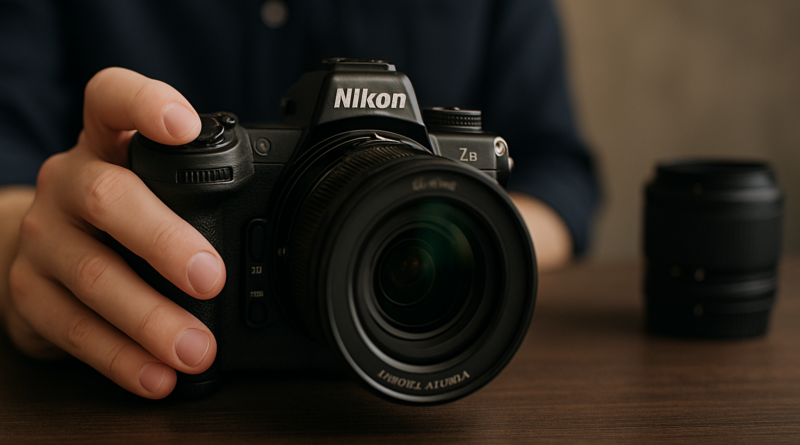
Nikon Z6 III Review: Is It the Best Hybrid Camera in 2026?
Quick Verdict: Who Should Buy the Nikon Z6 III?
The Nikon Z6 III is one of the strongest hybrid full-frame cameras for photographers who also shoot serious video. It combines a 24.5MP full-frame partially stacked sensor, fast autofocus, strong low-light performance, 6K RAW video, 4K/120p recording, and Nikon’s familiar handling in a body that makes sense for weddings, events, portraits, travel, documentary work, and creator content.
It is not the cheapest full-frame camera, and it is not the best choice if you only shoot stills or only shoot cinema-style video. But if you want one mirrorless camera that can handle professional photography and high-quality video without forcing you into constant compromises, the Z6 III deserves to be near the top of your shortlist.
Best for: hybrid shooters, wedding photographers, event creators, travel photographers, YouTubers, documentary shooters
Not ideal for: budget buyers, studio-only photographers, cinema-first filmmakers, users already heavily invested in Sony or Canon glass
Nikon Z6 III Key Specs
| Feature | Nikon Z6 III |
|---|---|
| Sensor | 24.5MP full-frame partially stacked CMOS |
| Processor | EXPEED 7 |
| Native ISO | 100–64,000 |
| Autofocus | Subject detection, 3D tracking |
| Subject detection | People, animals, vehicles, birds, aircraft and more |
| Burst shooting | Up to 120 fps with pre-release capture modes |
| Video | 6K/60p RAW, 4K UHD/120p, Full HD/240p |
| Screen | Vari-angle touchscreen |
| EVF | 5.76M-dot OLED, up to 4000 cd/m² brightness |
| Card slots | CFexpress Type B/XQD + SD UHS-II |
| Best use | Hybrid photo/video work |
Why the Nikon Z6 III Matters
The full-frame hybrid camera market is brutally competitive. Sony, Canon, Panasonic, and Nikon all have strong options, and most modern cameras are “good enough” in controlled conditions. The real test is different: can a camera stay reliable during a long wedding day, a fast-moving event, a low-light reception, a handheld travel shoot, or a paid client session where you need both stills and video?
That is where the Nikon Z6 III becomes interesting.
The Z6 III is not just a minor update to the Z6 II. Its partially stacked sensor gives it faster readout, its EXPEED 7 processor brings performance closer to Nikon’s higher-end bodies, and its video feature set is much more serious than what many older mid-range hybrid cameras offered.
For photographers who want one camera body for both stills and motion, the Z6 III is one of Nikon’s most practical all-around mirrorless bodies.
Design and Handling
Nikon still has one of the best reputations for camera ergonomics, and the Z6 III continues that strength. The grip feels secure, the control layout is logical, and the body is built for long shooting days rather than casual weekend use only.
This matters more than spec-sheet shoppers think. A hybrid camera needs to let you switch quickly between photo and video settings. If you are shooting a wedding ceremony, an interview, travel clips, behind-the-scenes content, and portraits on the same day, slow menu navigation becomes a real problem.
The Z6 III feels like a working camera. The vari-angle screen is useful for video, low-angle shooting, vertical social clips, and self-recording. The bright EVF is also a major advantage outdoors, especially for photographers who shoot in harsh sunlight.
Autofocus and Subject Tracking
Autofocus is one of the biggest reasons to buy the Nikon Z6 III over older Nikon bodies. The camera uses Nikon’s modern subject-detection and 3D-tracking system, which makes it far more useful for unpredictable subjects.
For hybrid shooters, this is not just about sharp photos. Autofocus also affects whether your video looks professional. Hunting focus, pulsing, and missed tracking can ruin footage quickly.
The Z6 III is especially useful for:
- Weddings and events where people move unpredictably
- Portrait sessions with subtle subject movement
- Children, pets, and family photography
- Travel videos where you are moving while filming
- Wildlife and bird photography when paired with the right lens
- YouTube and creator setups where you need face or eye tracking
The biggest practical advantage is confidence. You can spend less time babysitting focus and more time framing, timing, and directing.
Check current Nikon Z6 prices on Amazon
Image Quality
The Nikon Z6 III uses a 24.5MP full-frame sensor, which is a smart resolution for hybrid work. It gives you enough detail for professional photography, cropping, prints, and client delivery, but it does not create unnecessarily huge files like high-resolution 45MP or 60MP bodies.
That makes the Z6 III especially attractive for photographers who shoot high volume: weddings, events, portraits, travel, lifestyle, and documentary work.
The files have good editing flexibility, Nikon color is pleasing, and the camera performs well in low light. If you shoot receptions, indoor events, concerts, nighttime street scenes, or available-light portraits, this is exactly the kind of full-frame body that makes sense.
A higher-resolution camera may be better for landscapes, studio work, or commercial product photography. But for a true hybrid camera, 24.5MP is arguably a better balance of speed, storage efficiency, low-light usability, and video performance.
Low-Light Performance
Low-light performance is one of the Z6 III’s strongest selling points. The full-frame sensor, usable ISO range, autofocus improvements, and in-body stabilization make it a dependable option for real-world shooting where lighting is rarely perfect.
This is important for wedding photographers, event shooters, indoor creators, and travel photographers. You may not always have time to set up lights. You may not be allowed to use flash. You may be moving between bright outdoor scenes and dim interiors.
The Z6 III is built for exactly that kind of mixed environment.
For best results, pair it with fast Nikon Z lenses such as a 35mm f/1.8, 50mm f/1.8, 85mm f/1.8, or a professional f/2.8 zoom.
Video Performance
This is where the Nikon Z6 III becomes much more than just a stills camera with video added on.
The camera can record 6K/60p RAW, 4K UHD/120p, and Full HD/240p, making it a serious option for hybrid creators. The 4K/120p mode is especially useful for slow-motion B-roll, action, weddings, sports clips, travel sequences, and cinematic detail shots.
For many creators, the key benefit is flexibility. You can shoot high-quality talking-head footage, handheld clips, slow-motion sequences, vertical content, interviews, and event coverage with one body.
The Z6 III also gives Nikon users a more competitive answer to Sony and Canon hybrid bodies. Nikon used to lag behind in creator-focused video features, but the Z6 III is a much stronger option for users who want professional-looking footage without moving to a dedicated cinema camera.
Nikon Z6 III for Wedding Photography
The Z6 III makes a lot of sense for wedding photographers because it balances speed, low-light performance, autofocus, and video features.
Wedding work demands a camera that can handle:
- Low-light ceremonies
- Fast reception moments
- Portrait sessions
- Detail shots
- Candid documentary coverage
- Hybrid photo and video packages
- Long shooting days
The Z6 III is strong in all of these areas. It is also a better hybrid wedding body than older Z6-series cameras because autofocus and video performance are both significantly more competitive.
For serious wedding work, use dual-card recording, carry extra batteries, and invest in reliable memory cards. Do not cheap out on cards with a camera like this.
Nikon Z6 III for YouTube and Content Creation
The Nikon Z6 III is also a strong camera for YouTube, interviews, online courses, travel videos, and creator work. The vari-angle screen helps with self-recording, the autofocus is reliable enough for solo shooting, and the video quality is far beyond what most creators need for web content.
For creators, the biggest question is not whether the Z6 III is capable. It clearly is. The real question is whether it is overkill.
If you only make simple talking-head videos in a home office, you may be better served by a cheaper camera and better lighting, audio, and lenses. But if you create a mix of photography, YouTube content, client video, travel footage, and paid social content, the Z6 III becomes much easier to justify.
Nikon Z6 III vs Nikon Z6 II
The Nikon Z6 II is still a capable camera, but the Z6 III is the better choice if you care about autofocus, speed, EVF quality, and video.
The Z6 III gives you a more modern hybrid experience. It is especially worth the upgrade if you shoot moving subjects, paid video, weddings, events, or any situation where missed focus costs you real shots.
Choose the Nikon Z6 II if you mostly shoot stills and find it heavily discounted.
Choose the Nikon Z6 III if you want a more future-proof hybrid body with stronger video and autofocus performance.
Nikon Z6 III vs Nikon Z8
The Nikon Z8 is the more powerful camera overall. It has a higher-resolution sensor, more professional performance, and a stronger feature set for demanding commercial work.
But the Z6 III is smaller, less expensive, and more practical for many hybrid shooters. Not everyone needs the Z8. If you shoot weddings, portraits, events, travel, YouTube, and mixed client work, the Z6 III may be the smarter buy.
Choose the Nikon Z8 if you need higher resolution, flagship-level performance, and maximum professional capability.
Choose the Nikon Z6 III if you want a more affordable hybrid body that still delivers excellent stills and serious video.
What I Like About the Nikon Z6 III
The strongest thing about the Z6 III is balance. It does not chase one extreme specification at the expense of usability. Instead, it gives photographers and creators a well-rounded tool that works across many situations.
The best reasons to buy it are:
- Excellent hybrid photo and video feature set
- Strong autofocus and subject tracking
- 6K RAW and 4K/120p video options
- Good low-light performance
- Comfortable Nikon handling
- Bright, high-resolution EVF
- Practical 24.5MP file size
- Strong upgrade from the Z6 II
What Could Be Better
The Z6 III is excellent, but it is not perfect.
The biggest drawback is price. If you are just starting out, this is a serious investment once you add lenses, cards, batteries, and accessories.
It also uses a mixed card setup: CFexpress Type B/XQD plus SD UHS-II. That gives flexibility, but serious video shooters will need fast cards, and good CFexpress Type B cards are not cheap.
Finally, if you are already invested in Sony E-mount or Canon RF lenses, switching systems may not make financial sense. The camera body is only one part of the cost.
Best Accessories for Nikon Z6 III
If you buy the Z6 III, budget for accessories immediately. This is where affiliate conversions are likely to happen.
Recommended accessories:
| Accessory | Why You Need It |
|---|---|
| CFexpress Type B card | Best for demanding video and burst shooting |
| UHS-II SD card | Useful for backup, stills, and lighter workflows |
| Extra EN-EL15c battery | Essential for weddings, events, and video |
| Dual battery charger | Faster workflow for long shoots |
| Card reader | Speeds up file transfer |
| Camera cage | Useful for video rigs |
| Wireless microphone | Essential for YouTube and interviews |
| Travel tripod | Useful for creators and hybrid shooters |
| Camera backpack or sling | Protects body, lenses, cards, and accessories |
Who Should Buy the Nikon Z6 III?
You should buy the Nikon Z6 III if you want one full-frame camera that can handle both professional stills and serious video.
It is especially good for:
- Wedding photographers
- Event photographers
- Hybrid creators
- YouTubers
- Travel photographers
- Documentary shooters
- Portrait photographers who also shoot video
- Nikon Z users upgrading from older bodies
The Z6 III is not just a specs upgrade. It is a workflow upgrade. If your current camera makes you fight autofocus, video limitations, slow operation, or poor low-light performance, the Z6 III will feel like a major improvement.
Check Nikon Z6 prices on Amazon
Who Should Skip It?
You should probably skip the Nikon Z6 III if you are a beginner on a tight budget, a stills-only photographer who does not need advanced video, or a filmmaker who needs a dedicated cinema camera workflow.
You should also be careful if you are heavily invested in another lens mount. Switching systems can become expensive quickly, especially if you need professional zooms and primes.
For casual photography, the Z6 III may be more camera than you need. For serious hybrid work, however, it is one of Nikon’s most convincing mirrorless bodies.
Final Verdict: Is the Nikon Z6 III Worth It?
The Nikon Z6 III is absolutely worth considering if you want a full-frame hybrid camera for both photography and video. It offers strong image quality, dependable autofocus, impressive video specs, good low-light performance, and comfortable handling in a body that makes sense for demanding real-world use.
It is not the cheapest option, and it is not the best camera for every niche. But for hybrid shooters who want one camera for weddings, events, portraits, travel, YouTube, and client video, the Z6 III is one of the most complete Nikon bodies available.
Bottom line: the Nikon Z6 III is one of the best hybrid cameras for photographers who need serious stills and serious video in one reliable full-frame body.
FAQ
Is the Nikon Z6 III good for video?
Yes. The Nikon Z6 III is very strong for video, with 6K/60p RAW, 4K UHD/120p, Full HD/240p, a vari-angle screen, and strong autofocus. It is a serious hybrid camera, not just a stills camera with basic video.
Is the Nikon Z6 III good for wedding photography?
Yes. The Z6 III is a strong wedding camera because it offers good low-light performance, reliable autofocus, fast shooting, strong video tools, and comfortable handling for long shooting days.
Is the Nikon Z6 III better than the Z6 II?
For hybrid shooters, yes. The Z6 III is the better camera for autofocus, video, speed, EVF quality, and overall performance. The Z6 II may still be attractive if you find it at a major discount.
Is the Nikon Z6 III good for beginners?
It can be, but it is probably overkill for most beginners. New photographers may get better value from a cheaper body and investing more in lenses, lighting, audio, and memory cards.
What memory cards does the Nikon Z6 III use?
The Nikon Z6 III has one CFexpress Type B/XQD slot and one SD UHS-II slot. For serious video and burst shooting, a fast CFexpress Type B card is strongly recommended.