
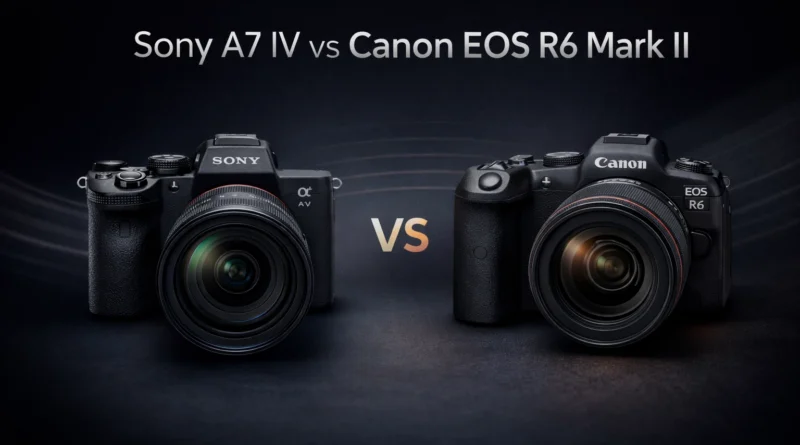
Sony A7 IV vs Canon EOS R6
Choosing a full-frame mirrorless camera today is less about whether it can deliver professional results — and more about how it fits your shooting style. Modern bodies are faster, smarter, and more capable than ever, yet subtle differences in sensor design, autofocus behavior, color science, and ergonomics can dramatically affect your day-to-day workflow.
Two models that consistently rise to the top of photographers’ shortlists are the Sony A7 IV and the Canon EOS R6. Both sit squarely in the “enthusiast-to-professional” segment, both are trusted by working photographers worldwide, and both promise uncompromising image quality in demanding real-world conditions.
Yet these cameras are built around very different philosophies. The Sony A7 IV emphasizes resolution, flexibility, and system depth — appealing to photographers who value detail, cropping freedom, and hybrid versatility. The Canon EOS R6, by contrast, prioritizes speed, low-light performance, and intuitive handling, making it a favorite among event, sports, and wedding shooters who need reliability above all else.
In this in-depth comparison for The Camera Choice, we go beyond spec sheets and marketing claims. We evaluate how these cameras perform where it matters most: image quality, autofocus reliability, shooting experience, and long-term system investment — so you can confidently choose the camera that deserves a place in your bag.
Sony A7 IV — The Modern Hybrid Benchmark


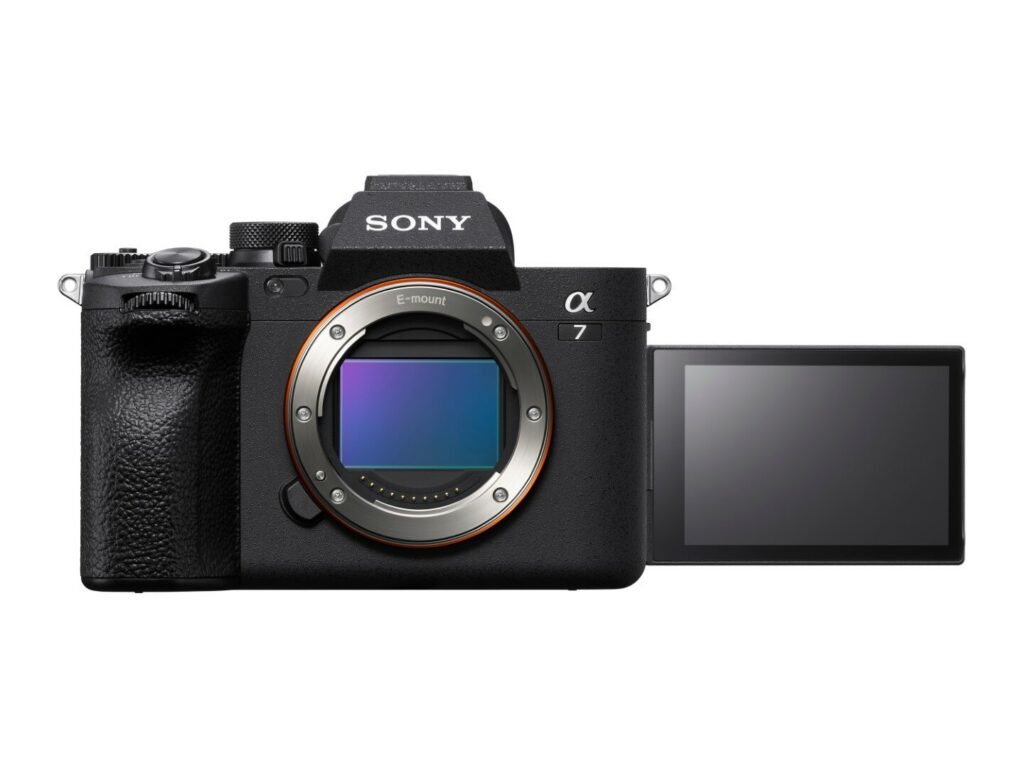
The Sony A7 IV is not just an incremental update — it represents Sony’s vision of a do-everything professional camerafor photographers who demand flexibility without compromise.
Sensor & Image Quality
At the heart of the A7 IV is a 33-megapixel backside-illuminated full-frame sensor, striking an excellent balance between resolution and low-light performance. For photographers, this means:
- Exceptional fine detail rendering for landscapes, architecture, and commercial work
- Greater cropping latitude without sacrificing print quality
- Files that hold up extremely well in large-format prints
Dynamic range is among the best in its class. Shadow recovery is impressive, allowing photographers to underexpose slightly to protect highlights and confidently lift details in post — a major advantage for high-contrast scenes such as weddings, outdoor portraits, and travel photography.
Color Science & RAW Flexibility
Sony’s latest color science shows a noticeable improvement over previous generations. Skin tones are more natural, and colors respond beautifully to subtle grading. RAW files are exceptionally malleable, making the A7 IV a strong choice for photographers who rely on post-production precision.
Autofocus: A Photographer’s Safety Net
Sony’s Real-time Tracking AF is one of the most advanced systems available today:
- Human, animal, and bird Eye AF works reliably even at wide apertures
- Tracking sticks confidently to subjects across the frame
- 759 phase-detect AF points provide near-edge-to-edge coverage
For portrait, wildlife, and event photographers, this translates to more keepers and fewer missed moments — especially when shooting fast primes wide open.
Handling, Build & Workflow
The A7 IV introduces improved ergonomics, a deeper grip, and a redesigned menu system that finally feels intuitive. Dual card slots (CFexpress Type A + SD) offer flexibility and speed, while Sony’s industry-leading E-mount ecosystem gives photographers access to an enormous range of native and third-party lenses at every price point.
Why Photographers Choose the Sony A7 IV
- High resolution without sacrificing low-light usability
- Best-in-class autofocus tracking
- Massive lens ecosystem
- Ideal for hybrid shooters who also create video content
Canon EOS R6 Mark II — Speed, Intelligence, and Real-World Reliability
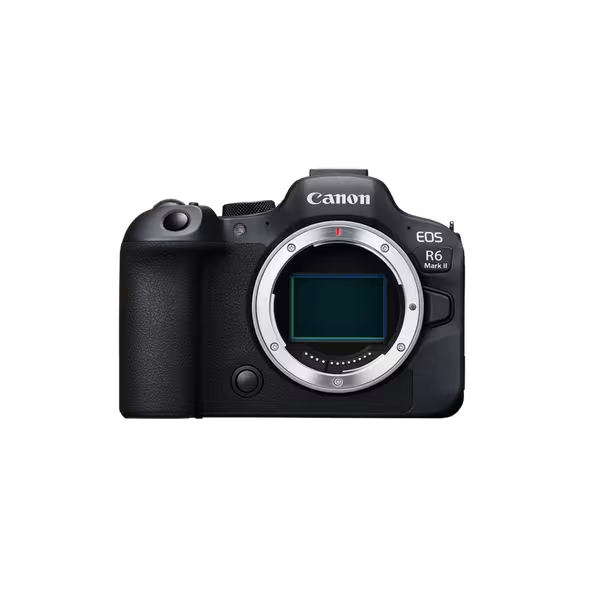
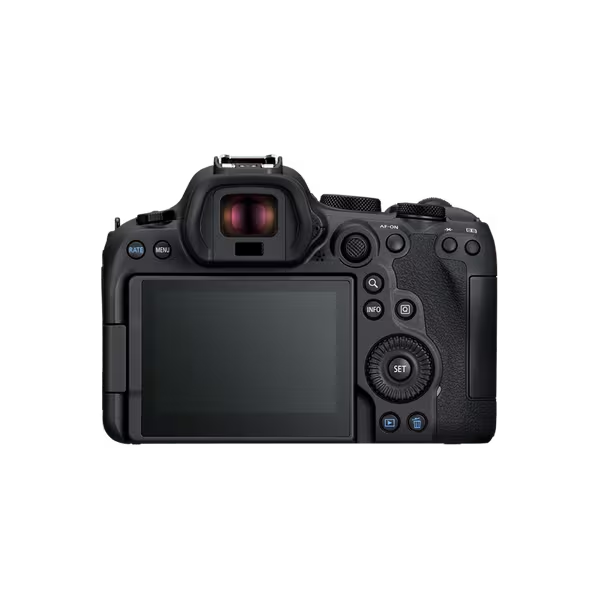
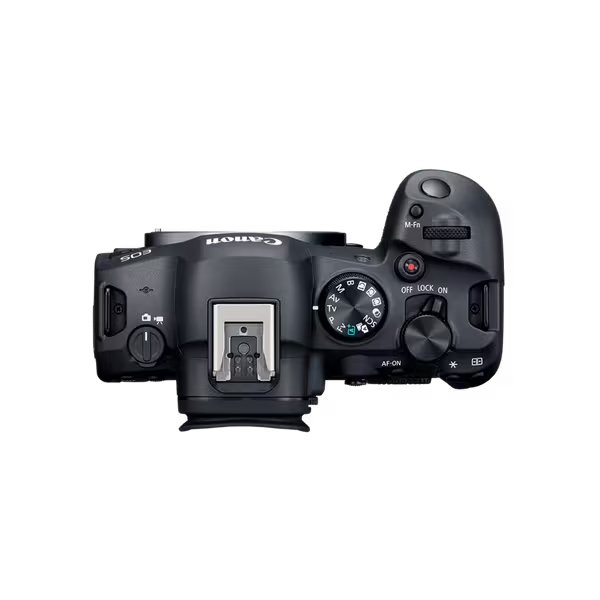
The Canon EOS R6 Mark II refines everything photographers loved about the original R6 and elevates it into a more complete, future-proof tool. This is a camera clearly designed for working photographers who prioritize speed, consistency, and confidence in demanding shooting environments.
Sensor & Image Quality
The R6 Mark II features a 24.2-megapixel full-frame CMOS sensor, a meaningful step up in resolution from its predecessor while preserving excellent low-light performance. In real-world use, this sensor delivers:
- Clean, detailed files with excellent high-ISO noise control
- Strong tonal transitions, especially in skin tones
- Enough resolution for moderate cropping while keeping file sizes manageable
For event, wedding, documentary, and sports photographers, the balance Canon strikes here is intentional: images remain clean and usable even at ISO values where other cameras begin to struggle.
Canon Color Science — A Key Buying Reason
Canon’s color rendering remains one of the strongest arguments for choosing the R6 Mark II. Skin tones are natural, warm, and consistent across lighting conditions — particularly valuable for portrait and wedding photographers who want files that look “finished” with minimal editing.
JPEG shooters will appreciate how refined the output looks straight out of camera, while RAW files maintain flexibility for fine adjustments without falling apart in post.
Autofocus: Class-Leading Confidence
The R6 Mark II uses Dual Pixel CMOS AF II, now enhanced with deeper subject recognition powered by Canon’s latest algorithms:
- Exceptionally fast and accurate eye, face, head, and body detection
- Reliable tracking of people, animals, birds, and vehicles
- Excellent performance even in low-contrast or backlit scenes
In practical terms, this means fewer missed shots, even when subjects move unpredictably. For photographers who shoot wide open or work under pressure, the AF system feels almost invisible — it simply works.
Speed & Continuous Shooting
Speed is one of the R6 Mark II’s biggest advantages:
- Extremely fast burst rates make it ideal for action, sports, and wildlife
- The camera clears buffers quickly and stays responsive during long sequences
This responsiveness is a major reason many professionals gravitate toward the R6 Mark II when timing is critical.
Handling, IBIS & Shooting Experience
Canon’s ergonomics are widely regarded as among the best in the industry. The R6 Mark II offers:
- A comfortable grip suitable for long shooting days
- A clear, logical menu system that minimizes downtime
- Highly effective in-body image stabilization, allowing confident handheld shooting with slower shutter speeds
The overall shooting experience feels refined and intuitive — a camera that gets out of your way and lets you focus on composition and timing.
RF Lens Ecosystem
While Canon’s RF lens lineup is more premium-oriented, it delivers exceptional optical quality. Many RF lenses are class-leading in sharpness and autofocus performance, making the R6 Mark II an excellent long-term system investment for photographers who value image quality above all else.
Why Photographers Choose the Canon EOS R6 Mark II
- Outstanding low-light performance
- Industry-leading autofocus reliability
- Beautiful, consistent color science
- Fast burst shooting for action and events
- Ergonomics trusted by professionals
👉 A camera built for photographers who cannot afford to miss the moment.
Sony A7 IV vs Canon EOS R6 Mark II — Key Differences for Photographers
| Category | Sony A7 IV | Canon EOS R6 Mark II |
|---|---|---|
| Sensor Resolution | 33 MP full-frame — excellent for landscapes, studio work, and heavy cropping | 24.2 MP full-frame — balanced resolution with strong low-light performance |
| Image Quality Philosophy | Maximum detail and post-processing flexibility | Clean, consistent files in real-world lighting |
| Dynamic Range | Excellent shadow recovery and highlight protection | Very good, especially at higher ISOs |
| High ISO Performance | Strong, but optimized for resolution | Outstanding — cleaner files in low light |
| Color Science | Neutral, highly flexible for grading | Warm, natural skin tones straight out of camera |
| Autofocus System | Real-time Tracking AF with Human/Animal/Bird Eye AF | Dual Pixel CMOS AF II with advanced subject recognition |
| AF Reliability | Exceptional tracking across the frame | Class-leading consistency in difficult conditions |
| Continuous Shooting | Moderate — suited to general photography | Very fast burst rates — ideal for sports, wildlife, events |
| In-Body Stabilization (IBIS) | Effective for handheld shooting | Highly effective, especially with RF lenses |
| Ergonomics & Menus | Improved design, highly customizable | Industry-leading comfort and intuitive menus |
| Lens Ecosystem | Massive E-mount selection (Sony + third-party) | Premium RF lenses with top-tier optical quality |
| Best Suited For | Landscapes, portraits, commercial, hybrid shooters | Weddings, sports, wildlife, documentary |
| Long-Term System Appeal | Flexibility, lens choice, hybrid use | Reliability, speed, professional consistency |
Final Verdict — Which One Should You Buy?
Choose the Canon EOS R6 Mark II if you value speed, low-light reliability, and a camera that delivers consistently under pressure.
Choose the Sony A7 IV if resolution, cropping freedom, and system flexibility are your top priorities.
Pingback: Canon EOS R6 Mark III Review – Pro Photographer Verdict (2026)
Pingback: Sony A7 IV Review (Hands-On) – Real World Photo & Video Test